Lake Nockamixon
LakeMonster AI fishing reportFirst stop
View lake imageryThe nearest main-lake point with visible wood or rock where the shallow flat pinches into deeper water — fish it from the deeper side. With no image zone returned, the findable version is: launch, idle to the first prominent point you can see breaking the shoreline line, one with laydowns, stumps, or rip-rap visible on it. Position the boat in water slightly deeper than the cover (assume 8–12 ft as a starting test depth), cast up onto the shallow shoulder of the point, and drag the bait down the slope toward you. First cast direction: parallel to the point's edge, then work progressively deeper until you contact cover. Target band to test: 4–10 ft along the drop. Clock: 25 minutes from first cast. If you start at 9:00, the move deadline is 9:25.
Backup area
The adjacent cut or small cove mouth immediately next to the first point — the nearest spot where a visible channel or drop swings close to shore. Move at the 9:25 deadline. Same bait first (the shaky worm stays on); only switch to the wacky rig on the follow/no-commit trigger. Cast across the cove mouth opening and drag toward the deeper edge, then hit any visible wood on the cut banks. This backup resolves the failed assumption at stop one — that fish were positioned on the point itself — by testing the next-best nearby transition without a long run, which matters because I have no verified travel times or access map for this lake. A second, farther area on the opposite shore is an alternative for a longer outing with a different launch, not part of this two-hour timeline.
When to move
- No contact by 9:25: relocate to the backup cut (relocation, not a bait change).
- Follows but no eats: tackle adjustment — wacky rig, slower deadstick cadence, same water.
- Unexpectedly stained water or a wind line pushing into your area: slow down further and shorten casts; if the whole area gets wind-chopped, shift to the visibly calmer side of the point on arrival and cast parallel to the point edge — I won't guess which flank is sheltered without seeing it.
- Wind building past a comfortable casting/control level or skies clouding with a front: that's a relocation call to the nearest wind-protected cut, not a bait change.
- Thunder or lightning: end the trip immediately. No last pass.
The call
Largemouth bass, slow-finesse bottom pattern, Wednesday, November 18, 2026, 9:00–11:00 AM EST primary window (backup 11:00 AM–12:00 PM). No recent community reports in the past 7 days, so this is a condition-based call, not a report-confirmed one. The lake-page surface temperature of 61°F is dated 2026-10-30 and is 449 hours old — stale for a current decision — so I'm treating this as late-fall water that has likely cooled into the low 50s (my estimate, not a measurement). In that seasonal phase, largemouth hold tight to wood and rock near depth changes and feed in short, slow bursts during the warmest, brightest part of the day. The 9 AM–11 AM stretch gives air temps climbing from 45°F to 55°F, a light WNW wind of 3.3–4.7 mph, and the morning solunar major (8:17–10:47 AM) overlapping the warm-up. This beats walleye or pike because calm, clear, high-pressure water (1033 mb forecast) favors a quiet, single-fish finesse bite over a trolling or search-bait program, and largemouth relate to visible shoreline cover that a short session can actually probe.
Read the water
- Water temperature: 61°F measured 2026-10-30; the graphed trend ends at 74.6°F dated Jul 12, 2026. Neither is current. My read: late-fall cooling, fish shallow-to-mid depth transitions (3–10 ft) adjacent to deeper water. That's a hypothesis to test, not an observed thermocline.
- Weather: Clear, 0% precip, high 56°F/low 31°F, wind 2–6 mph WNW all day, gusts under 12 mph. Calm surface means fish can see and hear everything — long casts, quiet presentations, no loud trolling-motor bursts.
- Pressure: 1032–1033 mb, steady-to-falling slightly. Context only; I won't move or change bait because of it.
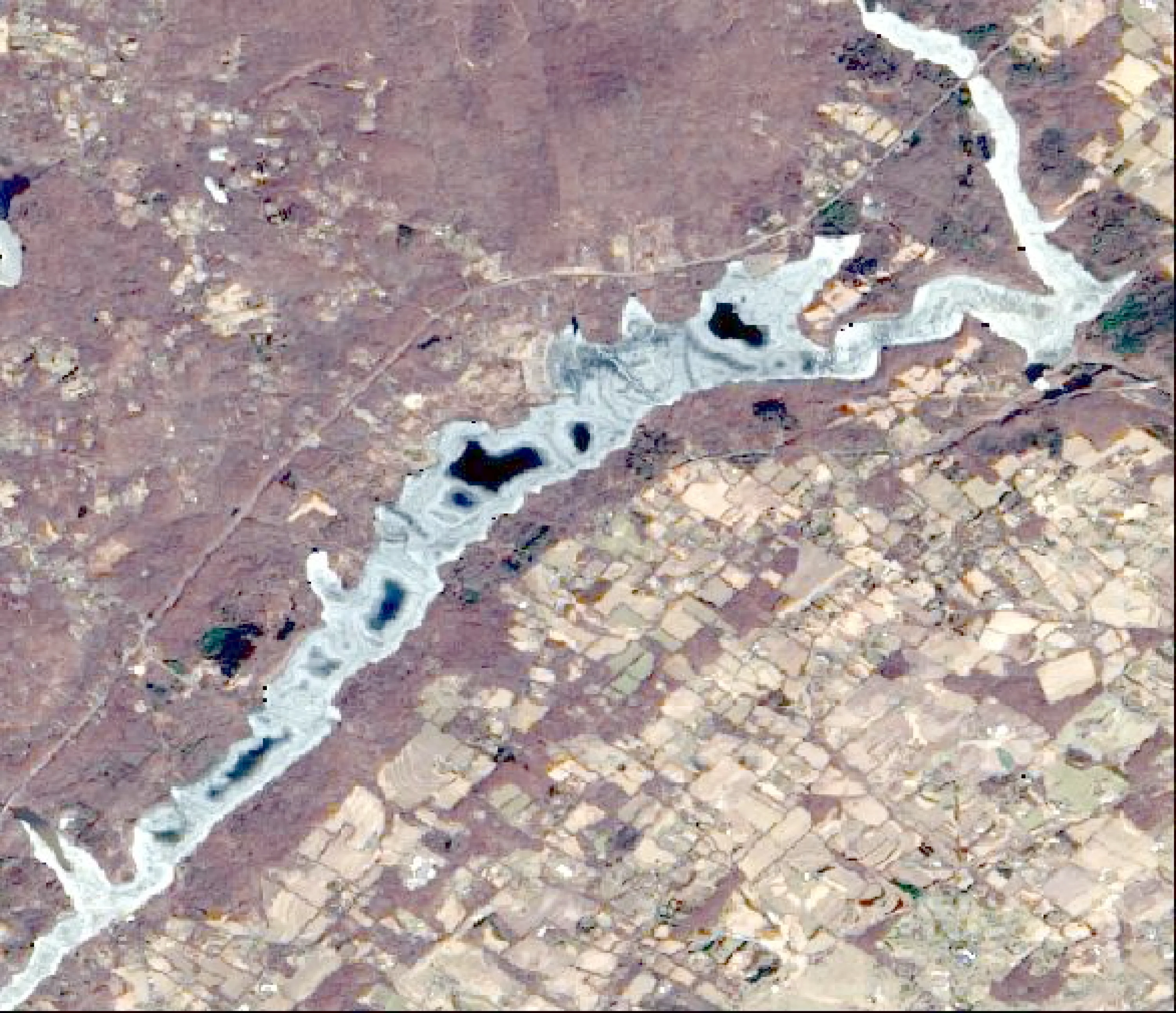
- Imagery: No satellite or thermal zone IDs returned for this lake, so I have no dated image boxes to name. Map placement is unavailable; I'm using findable, on-arrival shoreline shapes instead. Historical imagery would only locate geometry anyway, not today's fish position.
- Clarity: Clear sky plus calm wind implies at least average clarity; I'll assume the water is clear enough that natural colors and slower retrieves outperform bright, fast-moving blades.
First stop
The nearest main-lake point with visible wood or rock where the shallow flat pinches into deeper water — fish it from the deeper side. With no image zone returned, the findable version is: launch, idle to the first prominent point you can see breaking the shoreline line, one with laydowns, stumps, or rip-rap visible on it. Position the boat in water slightly deeper than the cover (assume 8–12 ft as a starting test depth), cast up onto the shallow shoulder of the point, and drag the bait down the slope toward you. First cast direction: parallel to the point's edge, then work progressively deeper until you contact cover. Target band to test: 4–10 ft along the drop. Clock: 25 minutes from first cast. If you start at 9:00, the move deadline is 9:25.
Rig and retrieve
Starter: 4" finesse plastic worm, green pumpkin, on a 1/4-oz shaky head, 8–10 lb fluorocarbon. Cast past the cover, let it fall on slack line, watch the line, then drag it one to two feet at a time with 3–4 second pauses — bottom contact the entire way. In cold, clear, calm water this slow, quiet, single-bait profile matches a largemouth's reduced chase radius; a crankbait or spinnerbait moved at fall speeds gets seen and refused. Keep it in the 4–10 ft band by counting it down and dragging, not reeling.
Backup presentation (one only): the same worm, wacky-rigged nose-hooked, deadsticked on a 10-second fall-and-sit cadence. Trigger to switch: a fish follows, swirls, or taps without committing on the shaky head — that means the fish is there but won't chase a dragging bait; the dying, quivering fall of a wacky bait is the adjustment.
Fishing window
Primary window: Wednesday, Nov 18, 9:00–11:00 AM EST. Hourly: 9 AM 45°F, 3.3 mph WNW (gusts 9.5); 10 AM 51°F, 3.7 mph WNW (gusts 10.0); 11 AM 55°F, 4.7 mph WNW (gusts 10.5). Clear throughout.
Sequence: 9:00 first casts on the point (shaky worm, drag retrieve). 9:25 — no contact, move to the backup spot. 9:30–10:30 fish the second area, switching to the wacky rig if follows occur. 10:30–11:00 return to the first point for a second pass as air temp peaks toward 55°F and shallow rock warms. Backup window: 11:00 AM–12:00 PM (58°F, 5.3 mph WNW gusts 11.0) — run the same two areas once more, then end. The evening solunar major (6:36–9:06 PM) is outside the requested daylight plan and is not included.
Backup area
The adjacent cut or small cove mouth immediately next to the first point — the nearest spot where a visible channel or drop swings close to shore. Move at the 9:25 deadline. Same bait first (the shaky worm stays on); only switch to the wacky rig on the follow/no-commit trigger. Cast across the cove mouth opening and drag toward the deeper edge, then hit any visible wood on the cut banks. This backup resolves the failed assumption at stop one — that fish were positioned on the point itself — by testing the next-best nearby transition without a long run, which matters because I have no verified travel times or access map for this lake. A second, farther area on the opposite shore is an alternative for a longer outing with a different launch, not part of this two-hour timeline.
Switch or stop
- No contact by 9:25: relocate to the backup cut (relocation, not a bait change).
- Follows but no eats: tackle adjustment — wacky rig, slower deadstick cadence, same water.
- Unexpectedly stained water or a wind line pushing into your area: slow down further and shorten casts; if the whole area gets wind-chopped, shift to the visibly calmer side of the point on arrival and cast parallel to the point edge — I won't guess which flank is sheltered without seeing it.
- Wind building past a comfortable casting/control level or skies clouding with a front: that's a relocation call to the nearest wind-protected cut, not a bait change.
- Thunder or lightning: end the trip immediately. No last pass.
Before you launch
- Rigged at the truck: shaky-head worm rod (as specified) plus a pre-tied wacky rig on a second hook — that's the whole two-rod plan.
- Arrival check: confirm the point actually shows wood/rock and a visible depth change; if the first point is featureless, drive to the next one before starting the clock.
- Shore adaptation: from the bank, fish the same point from its shallow side, casting out and dragging back down the slope — same bait, same cadence. I have no verified public access map, so confirm legal shoreline access on arrival.
- Material gap, stated once: no current water temperature (the 61°F reading is dated 2026-10-30), no recent angler reports, and no returned imagery zones — so depth, fish position, and the first-stop choice are my tactical hypotheses to verify on the water, not measured facts.
Sources behind this plan (4)
LakeMonster AI generated this plan from the sources below. Each source carries its own observation or forecast date.
Search lake catalogView details
No written analysis was saved.
Lake recordsView details
Lake Nockamixon — lake records
- Surface area (acres): 1450.00
- Maximum recorded depth (meters): Unknown
- Address: Unknown
- Recorded species: Largemouth bass, Smallmouth bass, Northern pike, Muskellunge, Walleye, Channel catfish, Brown bullhead, Yellow perch, White crappie, Black crappie, Bluegill, Pumpkinseed, Redear sunfish, Chain pickerel, Common carp, American eel
Amenities are catalog records, not confirmation of current openings, permits, fees, or safe access. Missing fields are unknown, not absent. Maximum depth is not current water level.
WeatherView details
Weather analysis for Lake Nockamixon on 2026-11-17: light wind, stable pressure
Recent catchesView details
Community reports for Lake Nockamixon over the past 7 days
No reports in last 7 days
LakeMonster AI
Turn the lake into a fishing plan
Forecast read: Skip watercraft. Use the imagery, weather, and listed species to choose your first area and when to move.
First area, exact setup, best window, and a backup.
Sign in or create a free account to use the quick questions. Building a plan and asking your own question are Pro.
Compare the next 3 days, scout imagery, and build a backup pattern.
8 sources for this lake
- Current water temp
- 71°F
- Water temp history
- 467 readings
- Hourly weather
- 224 hours
- Solunar timing
- 2/5
- Fish species
- 16 listed
- Satellite imagery
- 258 captures
- Thermal imagery
- 1388 captures
- Map structure
- available
Latest source update: Nov 27, 9:28 PM EST. Each image and reading has its own date.